
DOWNLOAD YOUR FREE COPY OF NENDO's 2021 TREND REPORT
Take our COVID-19 Vaccine Misinformation quiz and find out how good you are at spotting misinformation

DOWNLOAD YOUR FREE COPY OF NENDO's 2021 TREND REPORT
This is a Meru greeting that translates to "I come in peace."
While this week's newsletter arrives in complete peace, the contents are anything but. Because let’s be honest: corporate marketing is obsessed with the buzzword “humanise the brand,” yet brands spend resources washing away the most human trait of all-a little healthy friction.
This edition steps directly into the sharp-tongued arena of corporate rivalry. From Samsung trolling Apple’s latest launch to the 1972 legal showdowns that changed television forever. This week we delve into why brands need to drop the polite "Brand X" clichés and start swinging.
If you’re in marketing, whether in an agency or the corporate world, you’ve obviously come across these words “we shall do xyz to humanise the brand”. But what’s more human than a little fight?
On September 9th, after long tales of speculation and leaks, Apple released the iPhone Duo, and the guys at Samsung couldn’t keep their twitter fingers off the keyboard. “Let us know when you're done reheating our leftovers 😉” was one of their tweets as they trolled Apple during the launch. And just like that, Samsung became the uninvited guest at their competitor’s arguably biggest event of the year.
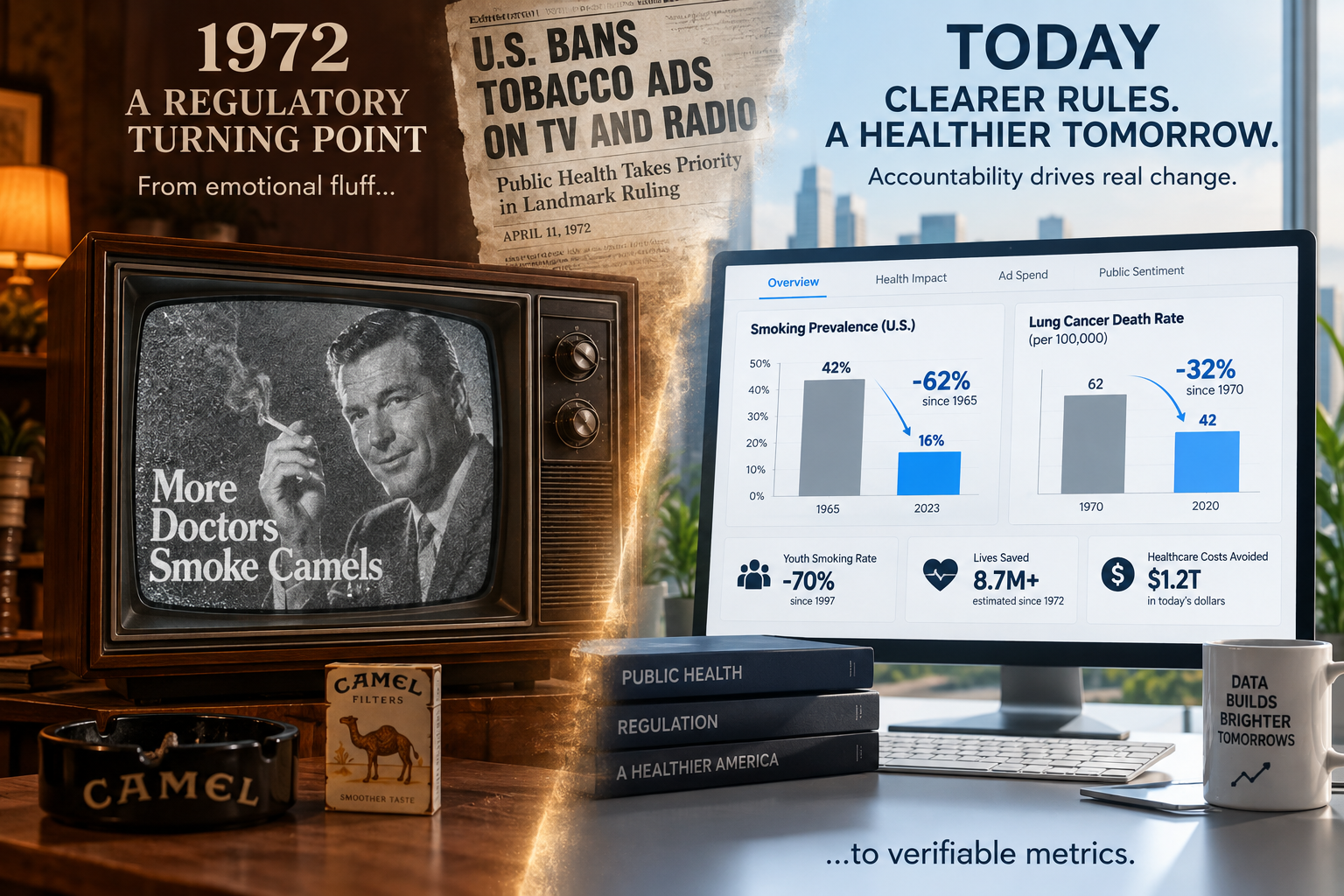
"Before 1972, naming competitors on TV was considered a taboo. The FTC changed everything by prioritizing consumer transparency and verifiable facts over empty marketing fluff. 📺📊"
Whatever Samsung did on that night is not new in the west. Comparative advertising has been around (at least in the US) since 1972. Before then, it was considered “corporate taboo” and viewed as unprofessional, legally risky and unfair disparagement. What changed though? Two things, the customer is king and creating a freer market.
You see, in America, before the internet, streaming or cable, there were three main TV networks - CBS, ABC and NBC. These three companies had some rules on advertising (on their networks) and one of them strictly banned naming competitors. Enter the 1960s and early 70s where consumer rights movements had massive public momentum. They fought against the then advertising trends, which they termed as “full of emotional fluff, puffery, and zero substance.”
The turning point came in 1972, when these giants were threatened with a lawsuit by the US Federal Trade Commission. The FTC pushed them to allow for direct comparisons with naming of competitors, arguing that masking a competitor's identity robbed consumers of the transparency required for rational decision-making. By legally permitting brands to name their rivals, regulators intended to transform commercials into a public utility thus injecting empirical, verifiable metrics into an arena previously dominated by emotional manipulation and empty marketing slogans.
While this revolutionized Western markets, showing that a well-executed comparison can permanently alter a brand’s trajectory, the ripple effect largely missed us.
You see, when executed properly, naming your rival can permanently alter a brand’s trajectory. However, when done poorly, it triggers a catastrophic backfire.
Take Apple’s iconic “Get a Mac” campaign from 2006. Instead of throwing aggressive, angry punches, Apple used two actors to personify a cool, casual Mac and a stuffy, error-prone PC. By relying on lighthearted wit rather than malicious insults, Apple didn’t just highlight software features; it redefined the social identity of a computer user. The campaign was a massive success, driving a 42% market share growth for Apple in its over its run.
On the flipside, when your claims aren’t airtight, consumer trust evaporates instantly! In 2004, the makers of Listerine ran an aggressive national campaign claiming that their mouthwash was “as effective as floss” in fighting plaque. They named dental floss as their direct rival, aiming to convince consumers they could skip the tedious string altogether. The backlash from rivals and regulators was swift. Consumer surveys presented in court showed 30% of viewers walked away completely deceived, believing they could abandon flossing entirely. Citing a severe public health risk, the court ruled that the ads were vastly misleading. Listerine was forced to pull the campaign, deploy 4,000 workers to manually cover up the labels on store shelves, and pay millions in damages.
This Listerine campaign is a classic example of what happens when a brand is publicly caught in a misleading comparison. It triggers severe consumer alienation. The initial perception of "usefulness" instantly shifts to feelings of betrayal, destroying long-term brand loyalty and driving consumers directly into the arms of the competition.
But while Western markets have spent decades navigating the high-stakes consequences of these direct brand wars, our local landscape looks vastly different. In Kenya, and arguably across much of the continent, our advertising industry remains locked in the era of “the polite gentleman.” Under current frameworks like the Competition Act and the Consumer Protection Act, naming or explicitly disparaging a competitor in ads is treated as an unfair market practice. We still witness our telecoms, banks, and detergent companies matching their wits against a faceless, imaginary "Brand X" or "Ordinary Detergent."
The truth is, we do far too little to challenge this norm, and it could be holding our markets back. When we restrict advertising to "polite" indirect comparisons, the ultimate loser is the African consumer. The "what's in it for me?" gets lost in vague promises rather than hard, comparative facts.
This is especially detrimental to challenger brands. As highlighted recently at the MSK Awards in Mombasa, challenger brands need the structural freedom to punch up. When an upcoming fintech in Lagos or an alternative telecom in Nairobi isn't allowed to directly point out the high fees or slow speeds of the reigning monopoly, entrenched brands get to coast on legacy loyalty without innovating.
But, hear me out, what if we borrowed from the 1972 FTC philosophy and finally let African challenger brands take off the gloves?
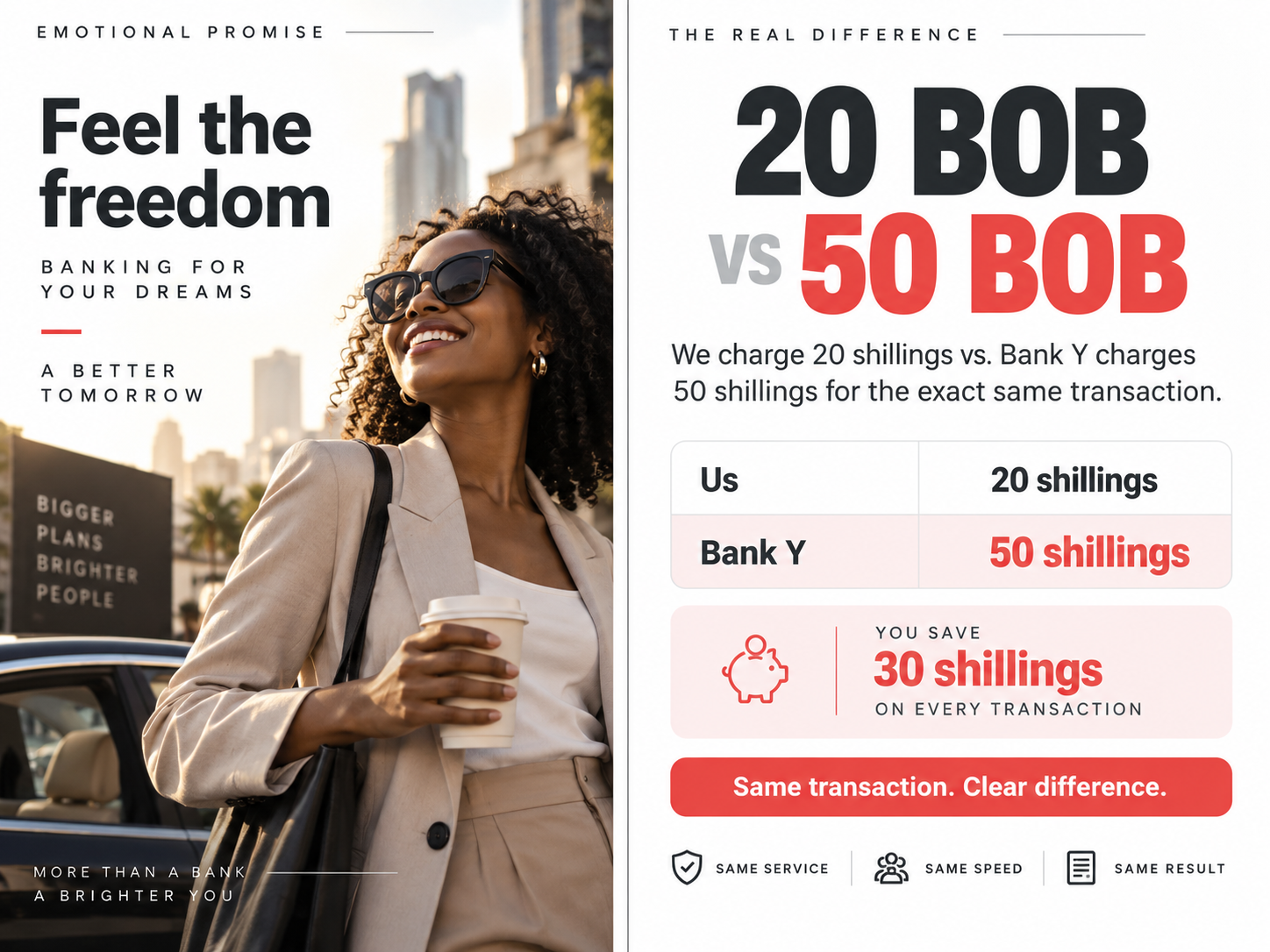
"Empirical data beats heavy lifestyle ads every time. Side-by-side pricing—like 20 shillings vs. 50 shillings—gives consumers a shield against premium illusions. 💡💰"
Firstly, it would give the Kenyan consumer a shield against premium illusions. Right now, brands can hide behind heavy emotional messaging, celebrity endorsements, and high-budget lifestyle ads without ever proving their actual value. In a tough economy, if a challenger digital bank or a new FMCG product could explicitly say, "We charge you 20 shillings while Bank Y charges you 50 shillings for the exact same transaction," it would instantly break corporate opacity. The consumer becomes king, armed with empirical, side-by-side data to make informed choices.
Secondly, this change would instantly jolt the advertising industry out of creative stagnation. Let's be honest: much of the local advertising space is comfortable, relying heavily on predictable clichés - vibrant music, standard dancing (maybe now Tik Tok challenges), words that end with “-ka” and happy families. When brands aren't allowed to punch upward, creativity spirals downwards to slumber. Allowing safe, named corporate rivalry would ignite a creative Renaissance. Local agencies would be inspired to sharpen their copy, think deeply about product metrics, and deliver clever, narrative-driven ads that capture the public imagination.
Lastly, this change would certainly, to some point, level the playing field for underdogs. Kenya's market features deeply entrenched, near-monopolistic giants across telecommunications, banking, and manufacturing. Under current rules, a small Kenyan startup with a genuinely superior or cheaper product cannot directly piggyback on a giant's name recognition to get noticed. Allowing direct comparative advertising would give local underdogs a legal slingshot. It would allow them to draw a line in the sand, benchmark themselves against the industry titans, and forcefully drive the entire market toward fairer pricing and better service quality.
A small fight, after all, never hurt nobody. In fact, it might be exactly what the Kenyan consumer and their favourite brands need to win.


